
Office and asset relocation projects can involve hundreds of individual items, multiple departments, and destinations with different delivery requirements. A company may be moving into a new headquarters, consolidating several offices, transferring equipment between facilities, or distributing assets after a location closes. Each situation brings decisions about what should move, where it belongs, when it needs to arrive, and how it should be prepared for transportation.
For facilities managers, IT departments, operations teams, and project managers, keeping those details organized is an important part of the relocation. Navis Pack & Ship supports businesses with Professional Packing, Custom Crating, multi-destination shipping coordination, Pickup and Delivery, and other services that help move business assets across the United States and internationally.

What Is Office and Asset Relocation?
Office relocation generally refers to moving a business's workplace furnishings, equipment, and related assets to another location. Asset relocation is a broader category that includes transferring physical business property between offices, facilities, departments, warehouses, or recipients.
These projects may happen together, but their scope can differ. An office relocation might include desks, conference room furniture, workstations, and technology equipment. An asset relocation project could involve moving selected equipment from several locations to a new facility while other assets are placed into storage, sold, reassigned, or distributed elsewhere.
The planning process depends on the assets involved, their destinations, and how the move affects ongoing operations.
Common Reasons Companies Relocate Business Assets
Changes in business operations frequently create a need to move equipment and furnishings without relocating an entire company. Some projects involve a single facility, while others require coordination across several locations.
- Office Moves & Expansions: Transferring furniture, technology, and workplace equipment into new or expanded facilities.
- Office Consolidations: Combining assets from multiple offices or distributing equipment after a consolidation.
- Corporate Restructuring: Reassigning furniture, IT equipment, and other assets as departments or facilities change.
- Facility Closures: Removing, redistributing, storing, or shipping equipment when a location closes.
- Workspace Renovations: Temporarily relocating furnishings and equipment during construction or improvements.
- Technology Upgrades: Moving servers, networking hardware, workstations, and other IT assets between facilities.
- Retail & Commercial Projects: Transferring displays, fixtures, kiosks, and operational equipment between locations.
- Equipment Reallocation: Sending machinery, tools, laboratory equipment, and specialized assets to facilities where they are needed.
A relocation may also be part of a larger business transition, such as an acquisition, lease expiration, or change in how a company uses its office space.
Business Assets That May Need Specialized Packing and Shipping
The contents of a commercial facility can vary considerably. Some items can be moved with conventional handling equipment, while others need additional preparation because of their weight, dimensions, size, or value.
Office and asset relocation shipments may include:
- Office Furniture: Desks, workstations, conference tables, seating, cabinets, and modular furnishings.
- IT Infrastructure: Servers, server racks, networking equipment, storage systems, and computer hardware.
- Electronics & AV Equipment: Monitors, commercial displays, video conferencing systems, and presentation equipment.
- Retail Fixtures: Shelving, display cases, kiosks, signage, and point-of-sale equipment.
- Medical & Laboratory Equipment: Testing instruments, analyzers, diagnostic systems, and specialized electronics.
- Industrial & Operational Equipment: Machinery, tools, workbenches, production equipment, and maintenance assets.
- Specialty Furnishings: Large tables, decorative installations, artwork, and valuable commercial pieces.
- Inventory & Business Materials: Equipment accessories, supplies, boxed materials, and selected commercial inventory.
An accurate understanding of what is being moved helps determine packing requirements, transportation options, and any equipment needed at pickup or delivery.
Planning an Office or Asset Relocation
The early planning stage is an opportunity to identify problems before equipment is removed from its current location. Asset records, destination assignments, building access, and project schedules can all influence the shipping plan.
Create an Asset Inventory
An inventory establishes what is being relocated and where each item should go. Depending on the project, records may include descriptions, quantities, dimensions, asset identification numbers, current locations, and assigned destinations. Companies may also document item condition and photograph equipment before packing. This information can be useful when shipments contain valuable assets or when several departments are involved in receiving and verifying equipment.
Confirm Pickup and Delivery Requirements
Commercial buildings can have restrictions on loading dock access, freight elevators, parking, delivery appointments, and permitted moving hours. Larger equipment may also require liftgates, forklifts, rigging, or other handling arrangements. Reviewing these requirements before scheduling transportation helps prevent delays and identifies situations where additional resources may be needed. For multi-location projects, each facility may have its own access rules and receiving procedures.
Establish the Relocation Schedule
Office relocations frequently take place around lease dates, renovation schedules, employee transitions, and technology installations. Some assets can move well in advance, while others need to remain in service until a planned shutdown or replacement is ready. A phased schedule allows equipment to be shipped according to operational priorities. It also gives receiving teams time to prepare the destination before deliveries arrive.
Professional Packing and Custom Crating for Business Assets
Packing methods should reflect the equipment being transported and the conditions it may encounter. Office furniture may need surface protection and secure handling, while electronics, laboratory instruments, and heavy equipment can have different cushioning, support, and securing requirements.
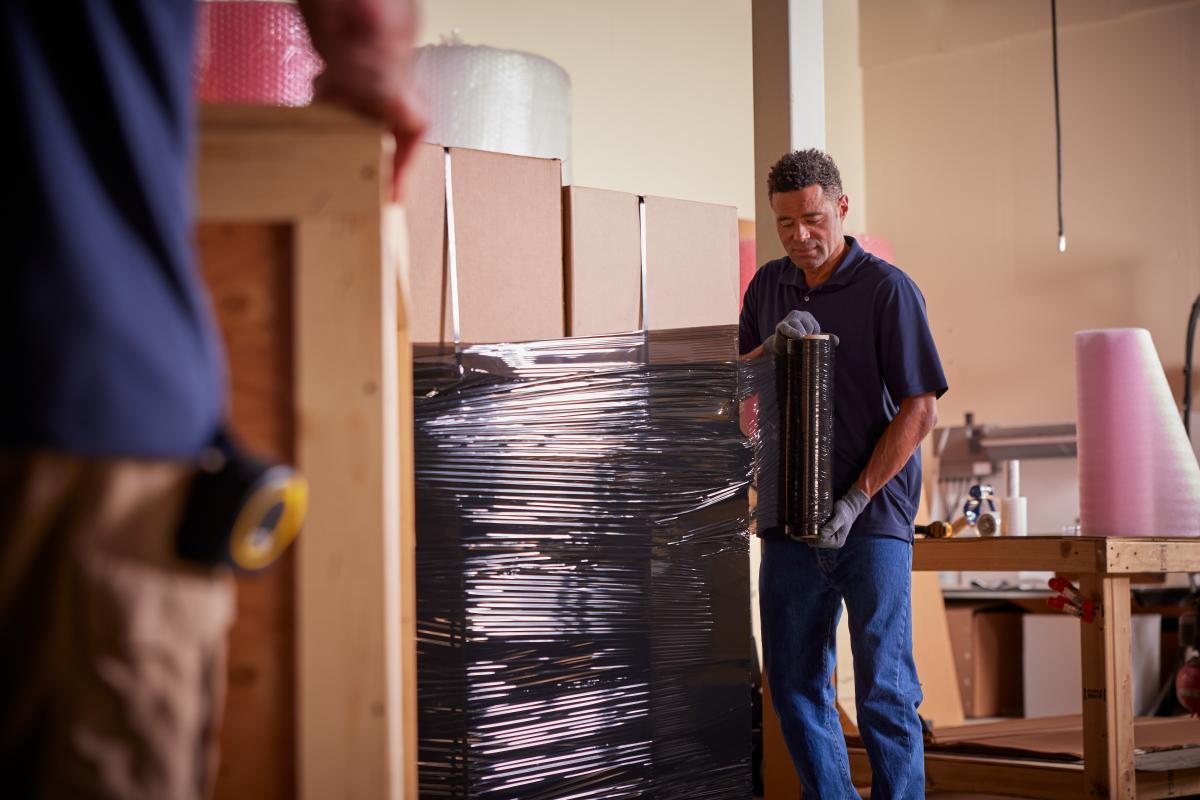
Navis Pack & Ship can provide secure packing, protective wrapping, palletizing, blocking and bracing, and crating for commercial assets. The appropriate method depends on the item's dimensions, weight, construction, handling needs, and transportation method.
Custom Crating can be especially useful for equipment that is oversized, fragile, high-value, unusually shaped, or difficult to secure on a standard pallet. Crates can be designed to support equipment during handling and transit, with export-ready construction available for international shipments.
Relocating IT Equipment and Workplace Technology
Technology relocation deserves particular attention because equipment often supports active business systems. Servers, networking hardware, storage devices, desktop computers, monitors, and conference room systems may need to be moved according to an installation or migration schedule.
Before transportation, internal IT teams or authorized vendors should address shutdown procedures, data protection, cable identification, equipment disconnection, and any manufacturer-specific handling instructions. These responsibilities should be established before the physical move begins.
Navis can assist with packing, crating, and transportation once equipment has been prepared for shipment. Coordinating the shipping schedule with the company's IT and facilities teams can help equipment arrive in the order needed for installation.
Multi-Location Asset Relocation and Distribution
Not every relocation has one origin and one destination. A company closing several offices may need to send furniture to a regional headquarters, IT equipment to another facility, and surplus assets to storage or a separate recipient. Multi-location projects benefit from clear destination assignments and consistent labeling. Equipment may be collected from several sites, consolidated when appropriate, and then routed to different facilities based on the relocation plan. Navis can help coordinate multi-origin and multi-destination shipments, including projects involving business assets moving across state lines or internationally. Consolidation and staged shipping may be useful when destinations have different schedules or receiving capabilities.
Storage, Staging and Shipment Consolidation
A new office or facility may not be ready to receive everything at once. Renovations, installation work, construction delays, and phased occupancy can create gaps between when equipment must leave its original location and when it can be delivered. Storage and staging options can help manage these gaps. Depending on the project and location, assets may be held temporarily, organized by destination, or prepared for shipment according to the receiving schedule. Shipment consolidation can also be useful when equipment is collected from multiple offices or suppliers. Rather than arranging unrelated shipments without a coordinated plan, companies can organize assets around the destinations and delivery windows that matter to the project.
Domestic and International Asset Relocation
Business assets may move between facilities in the same region, across the United States, or to operations in another country. Transportation choices depend on shipment size, weight, urgency, destination, and handling requirements. Domestic relocations may use less-than-truckload (LTL) freight, full truckload transportation, air freight, or specialized carriers. International projects can involve air or ocean freight, export packing, customs documentation, and destination-specific requirements. For international shipments, businesses should also confirm import responsibilities, applicable duties and taxes, and any restrictions associated with the equipment being transferred. Planning these details early can help avoid complications after a shipment leaves its origin.
Delivery Planning and White Glove Options
Delivery requirements can differ between facilities. A warehouse may be equipped to receive palletized freight at a loading dock, while an office or showroom may need equipment brought inside and placed in a designated area. White Glove Delivery options can include scheduled appointments, inside delivery, room-of-choice placement, unpacking, and removal of packing materials. Service availability depends on the shipment, destination, and local capabilities.
Companies should communicate delivery expectations in advance, especially when receiving locations have limited staffing, restricted access, or equipment installation schedules.
What Should Companies Consider Before Relocating Assets?
A relocation plan should account for the total project rather than transportation alone. Packing requirements, pickup access, destination readiness, equipment handling, and delivery timing can all affect the schedule and cost.
Before requesting a relocation quote, it helps to have:
- An inventory or general description of the assets
- Pickup and delivery locations
- Dimensions and weights for large or specialized equipment
- Photos of items requiring packing or crating
- Building access and loading requirements
- Preferred pickup and delivery dates
- Information about multiple destinations or phased shipments
- Storage, inside delivery, or unpacking requirements
Complete information makes it easier to evaluate transportation options and identify work that needs to happen before pickup.
How Navis Pack & Ship Supports Office and Asset Relocation
Navis Pack & Ship works with businesses relocating office furnishings, technology, commercial equipment, and other physical assets. Our locations can assist with every step of the process.
For larger or more involved relocations, coordination may include multiple pickup locations, shipment consolidation, staged deliveries, and specialized handling for valuable or oversized equipment. Navis works with facilities managers, IT teams, operations departments, and other project contacts to develop a shipping plan that fits the assets and relocation schedule.
Plan Your Office or Asset Relocation with Navis
Preparing for an office move, facility consolidation, or business asset transfer? Connect with Navis Pack & Ship to discuss your relocation project, find a nearby location, or request a customized quote.
Frequently Asked Questions
What is the difference between office relocation and asset relocation?
Office relocation generally involves moving workplace furnishings, equipment, and related assets to another office or facility. Asset relocation can include transferring selected business property between multiple facilities, departments, or recipients without moving an entire office.
Can Navis relocate office furniture and IT equipment?
Yes. Navis can assist with shipping office furniture, workstations, servers, networking hardware, commercial displays, and other business equipment.
Can business assets be shipped to multiple locations?
Yes. Navis can coordinate multi-destination asset shipments when equipment needs to be distributed among offices, facilities, or other recipients. Shipment planning can account for different destinations, receiving requirements, and delivery schedules.
Does office equipment need Custom Crating?
Not all office equipment needs to be crated, however, it's often recommended. Heavy, fragile, valuable, oversized, or unusually shaped assets benefit from a crate designed for their dimensions and handling requirements to avoid costly damage during shipping.
Can Navis help with office consolidation and facility closures?
Yes. Navis can assist with packing and shipping business assets during office consolidations, facility closures, equipment transfers, and other operational changes. Services can be planned around pickup deadlines, multiple destinations, and project schedules.
Are storage and staging available during an asset relocation?
Storage, staging, and shipment consolidation options may be available depending on the Navis location and project. These services can help when assets must leave one facility before the receiving location is ready.
Can Navis ship business assets internationally?
Yes. Navis can coordinate International Shipping for qualifying business assets, including export crating and air or ocean freight options. Customs requirements, documentation, and destination restrictions should be reviewed as part of the shipping plan.
Can Navis provide inside delivery for relocated assets?
Inside delivery and White Glove Service options may be available for qualifying shipments. Depending on the destination, services can include scheduled delivery, placement, unpacking, and removal of packing materials.
What information is needed for an office or asset relocation quote?
Provide an inventory or description of the assets, pickup and delivery addresses, dimensions and weights when available, photos of large equipment, the project timeline, and any special handling or delivery requirements. Include information about multiple locations, storage needs, and building access restrictions.
